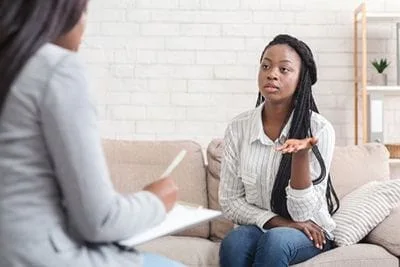
Looking for help improving your communication skills? Dr. Sandra Ingram of Winston-Salem offers online coaching for people everywhere in the United States to help you achieve your goal.
Benefits of Communication Coaching
Communicating can be tricky business. You say one thing, but the person you are speaking to hears something different. And often, it’s not what you say but how you say it. Your tone and body language can send a completely different message than you mean to send. Then, there are times when you simply cannot find the right words or even the confidence to speak up.
Sadly, it’s such issues that cause problems in relationships – both professional and personal – all the time. However, it doesn’t have to be that way in your life. Dr. Ingram of Winston-Salem shares a few ways that communication coaching can help.
1. Identifying Communication Issues
It can be hard to improve how you communicate if you don’t know where your trouble lies. A coach can help you identify areas that need work and provide exercises to help you improve.
2. Building Confidence
Whether you’re speaking in front of a huge audience or one-on-one with a loved one, confidence is important. It helps you say what needs to be said and get your message across. By working with a coach, you can build the confidence you need to communicate more successfully in your career, marriage, friendships, and even with strangers you bump into at the local market.
3. Sending the Right Message
Again, it’s not always about what you say but how you say it that is causing issues. For example, an expression you make while speaking might appear disapproving, even if that is not how you feel. Or your tone might make it seem like you don’t recognize whether something is serious to your partner. You might have never been told any of this because loved ones don’t want to hurt your feelings, or they don’t understand what is going on. A coach is an impartial party who can provide such insight, and help you learn how to send your message more effectively.
4. Learning to Listen
Communicating isn’t a one-way street. It’s not just about you and your message. It’s also about actively listening to the other party or parties. To be an effective communicator, you have to be an active listener, and coaching can help you build those skills.
If you’re ready to take your communication skills to the next healthy level, schedule an online appointment from anywhere in the United States with Dr. Sandra Ingram of Winston-Salem today.
Communication is a key that fits many locks.
Communicating is both the easiest and most awkward thing to do. It comes naturally, but there are nuances I often forget. Effective communication takes practice but bears great rewards.
Like a universal key, I use communication to access things otherwise unavailable to me.
I communicate well with my spouse, family, friends, and co-workers. I show that I care about what they are sharing. With each person, I listen, reiterate, and respond. I give my undivided attention, even on the busiest days.
If the time is unavailable initially, we agree on another time. I commit myself to the agreed-upon time.
Because I make it a point to practice effective communication skills, my interactions with others become easier.
Directing my attention to another is needs and removing my attention from my concerns becomes easier each time I consciously listen. I become less focused on myself and more considerate of others.
Effective communication breeds excellent communication. My ability to communicate well improves the communicative ability of those around me. Additionally, a heightened level of honesty exists in my life, because even difficult subjects become easier to discuss.
Today, I am aware of how valuable attentiveness can be. I continue to strengthen my communication skills and hope to maintain a positive impact on the communication skills of others.
Self-Reflection Questions:
- Is offering advice necessary to honest communication?
- Whom do I turn to when I need to talk?
- How can I help someone with poor communication skills?